Siquijor Scooter Travel Essentials
Ride like a local, not a tourist
Siquijor is a scooter island. The roads are made for it — a 70km circumferential loop, coastal views, inland waterfalls and beaches you can only reach on two wheels. But riding here is different from riding in a city. The roads have character. This guide helps you understand them before you start the engine.
🛣️ What to Expect on Siquijor Roads
The main coastal road is paved and generally in good condition. But paved covers a wide range on this island.
-
Curves are constant. The coastal road follows the shoreline — it bends, dips and rises. Riders who treat it like a straight highway get into trouble fast.
-
Inland roads are narrower. Routes toward Cambugahay Falls and Mt. Bandilaan are tighter, sometimes steep and occasionally rough. Not dangerous if you're careful, but not beginner-friendly at speed.
-
Traffic is light. You'll share the road with tricycles, locals on scooters, and the occasional truck. No heavy traffic, but blind curves mean you can't assume the road is clear.
-
Sand on coastal roads. Near beaches, sand drifts onto the road surface. It's slippery. Slow down near beach access points.
-
Night riding changes everything. Street lighting is minimal outside town centers. Curves you read easily in daylight become guesswork at night. Most experienced riders are back before dark.
⛽ Fuel Tips
Gas stations are not everywhere. This is the mistake most first-time riders make — they leave San Juan with a half tank and run low somewhere on the south loop.
-
Fill up in San Juan or Larena before heading out for the day. These are the most reliable fuel stops.
- Small roadside fuel sellers (plastic bottles) exist in some barangays — useful in emergencies but more expensive.
- If you're doing the full island loop, fill up at the start. Don't wait until you think you need it.
- Most scooter rentals come with a full tank — confirm this when you pick up the unit.
🧰 Rider Essentials
What you actually need on a scooter in Siquijor:
-
Helmet — Non-negotiable. Some rentals include one. Bring your own if you can — fit and condition matter.
-
Closed shoes or sandals with grip — Slippers are common but not ideal for longer rides or wet roads. Sandals with a back strap are the minimum.
-
Light rain jacket — Compact, breathable, easy to pack. Afternoon rain is common. A rain jacket changes your whole day.
-
Phone mount — Keep your phone visible for navigation without holding it. Essential for unfamiliar routes.
-
Dry bag or waterproof pouch — For your phone, cash and anything you don't want wet at waterfalls or in rain.
-
Sunglasses — Wind and sun on coastal roads. You'll want them.
-
Small backpack — Keep it light. Heavy bags shift your balance on curves.
🗺️ Beginner Scooter Route (1-Day Loop)
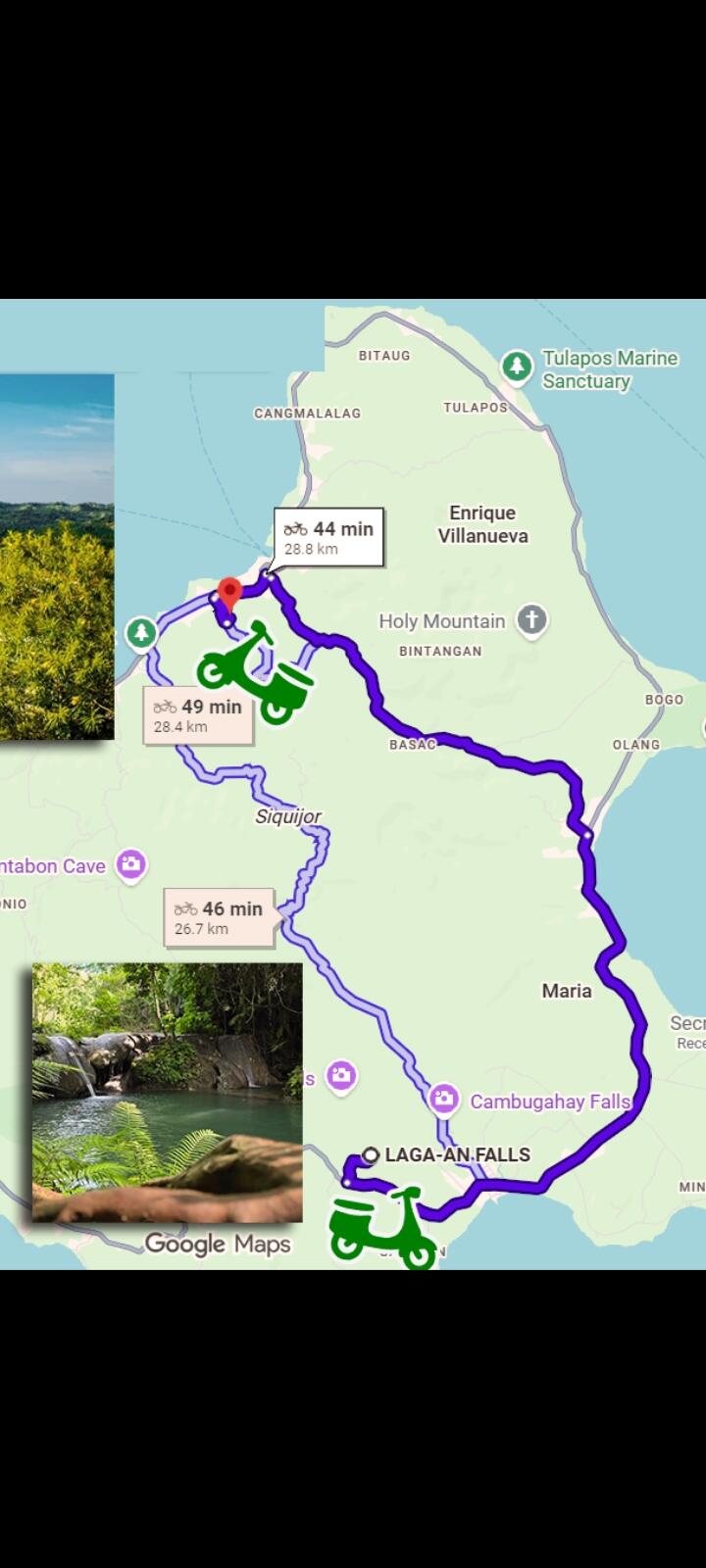
This is the most common first-day route. Clockwise from San Juan, covering the main highlights without backtracking.
-
7:00 AM — Start in San Juan. Fill up fuel. Grab breakfast. Leave early before heat and afternoon rain.
-
7:30 AM — Paliton Beach. Short ride north. Walk the beach, take photos. Quiet in the morning.
-
9:00 AM — Cambugahay Falls. Ride inland. Park at the entrance, short walk down. Rope swings, multiple pools. Go before the tour groups arrive.
-
11:00 AM — Balete Tree. Quick roadside stop. Ancient tree with a fish pool. Worth 20 minutes.
-
12:00 PM — Lazi Church & Convent. Heritage stop on the south side. One of the oldest churches in the Philippines. Lunch nearby.
-
1:30 PM — Salagdoong Beach. Cliff diving area. Clear water. Gets busy by midday — you'll still catch it before the late afternoon crowd.
-
3:30 PM — Ride back to San Juan. Take the coastal road. Stop anywhere that looks good. You've earned it.
-
5:30 PM — Paliton sunset. Optional return for the sunset. Best light on the island.
Total riding time: ~3–4 hours. Total stops: full day. This is the pace — not rushed, not slow.
See full scooter route breakdown →
⚠️ Safety Rules from a Local Rider
These aren't warnings for the sake of warnings. These are things that actually cause problems for visitors.
-
Slow down on curves. You don't know what's on the other side. Locals know the road. You don't yet.
-
Rain makes everything slippery. Especially curves, painted road markings and sandy patches near beaches. If it rains hard, pull over and wait. 30 minutes is usually enough.
-
Don't ride at night on unfamiliar roads. The island gets dark. Potholes, animals and unmarked curves are real hazards without proper lighting.
-
Watch for sand near beaches. It drifts onto the road surface and behaves like gravel. Slow down near beach access points.
-
Don't ride beyond your comfort level. If a road feels too steep or too narrow, turn around. There's always another way.
-
Check your brakes before you leave. Squeeze both levers before you ride. If something feels off, tell the rental shop before you go.
🌤️ Best Time to Ride
-
Morning (6–10 AM): Best window. Cool air, dry roads, clear visibility, minimal traffic. This is when locals move.
-
Midday (10 AM–1 PM): Hot. Still rideable but less comfortable. Good time for waterfall stops where shade and water help.
-
Afternoon (1–4 PM): Wind picks up on the western side. Rain becomes more likely. Still fine for riding but watch the sky.
-
Evening (4–6 PM): Good for sunset spots. Ride back before dark.
-
Night: Not recommended on unfamiliar roads. If you're staying in San Juan, short local rides are fine. Long routes — no.
🎒 What to Bring on Your Ride
- Water (at least 1 liter — it's hot)
- Cash (for entrance fees, food, fuel — cards not accepted everywhere)
- Swimwear (you'll find a beach or waterfall)
- Quick-dry towel
- Dry bag for valuables
- Sunscreen (reef-safe near marine sanctuaries)
- Light snack (some routes have limited food stops)
- Offline maps downloaded before you leave
Full packing list by season →
🛵 Scooter Rental Tips
Before you ride off, spend 5 minutes on this:
-
Check the brakes. Both front and rear. Squeeze them before you move.
-
Check the lights. Headlight, brake light, turn signals. You'll need them if you're out past dusk.
-
Confirm the fuel policy. Most rentals give you a full tank and expect it returned full. Clarify before you go.
-
Take photos of the scooter. Document any existing scratches or damage before you leave the rental shop. Protects you from disputes on return.
-
Test the horn. Useful on blind curves — a quick beep before a tight turn is standard local practice.
-
Ask about breakdown support. Good rental shops will tell you what to do if the scooter breaks down. Know the number before you need it.
Book your scooter rental in San Juan →
🌴 We're Here to Help You Ride
We're here to help you explore Siquijor safely and freely on two wheels. Whether it's your first time on a scooter in the Philippines or you've ridden before — the island has its own rhythm. Learn it, respect it and it'll give you some of the best riding you've ever done.
Ride slow enough to notice things. Stop when something looks good. That's the local way.
Ikot ka lang. Hinto ka kung saan maganda.
(Just ride around. Stop where it's beautiful.)
For everything else about moving around the island: Getting Around Siquijor Guide →
Check conditions before you head out: Siquijor Live Travel Conditions →
Browse all SiquiRide guides →